The most common advice about ladies raw denim jeans is also the most misleading. You're told to buy them tight, size down, and let the waist stretch into place. That shortcut ignores how women's bodies fit into a pattern, and it ignores how an unwashed fabric behaves after its first soak. A better approach starts with measurements, finishing state, and intended care. Those three things tell you far more than a size label ever will.
Table of Contents
- Why Raw Denim Changes the Jeans You Buy
- Understanding Raw Denim and Its Finish
- Choosing the Right Fit for Women's Bodies
- Compare Sanforized and Unsanforized Denim
- Wear and Care Raw Denim Without Mishaps
- Specify and Manufacture Reliable Raw Denim Jeans
- Turn Product Decisions into Clear Marketing
- Build Your Final Raw Denim Decision
Why Raw Denim Changes the Jeans You Buy
Raw denim isn't just a dark jean that skipped a wash. It's an upstream design choice that shapes everything that follows. Fabric weight, yarn construction, indigo dyeing, finishing state, pattern engineering, seams, pockets, and trims decide how the garment will fit, fade, and feel months later. A heavily washed jean arrives with its character already built in by the factory. A raw jean arrives unfinished on purpose, so your wear does part of that work.
Like uncoated leather, the hide you buy on day one isn't the surface you'll own a year later. Creases, contact, and care create the final character. Raw denim works the same way, which means you can't judge it by factory appearance alone. You have to judge the accuracy of its measurements, promises, and care instructions.
Who Needs This Way of Thinking
Shoppers need it because fit can change after laundering, sometimes substantially. Product teams need it because they're designing for a large, internationally distributed supply chain where specifications travel farther than the people who wrote them. The scale explains the stakes. A U.S. International Trade Commission working paper on denim apparel trade estimated the global denim-apparel market at approximately $60–$110 billion in 2021, with the U.S. jeans market alone at $16 billion in 2020, and reported that more than 90% of U.S. denim apparel is supplied by imports.
When design, sourcing, and sewing happen in different places, vague language becomes a fit problem. Shrinkage allowances, waistband engineering, pocket placement, and wash instructions have to be written precisely, or the customer discovers the error in her laundry room. Teams that test product pages and fit guidance with the same rigor, like those using Landra for conversion optimization teams, understand a related lesson. Clear information up front prevents expensive confusion later.
The core principle: A raw jean is a promise about future behavior, not just a garment on a hanger.
That promise is only trustworthy when the measurements behind it are real, tested, and explained in plain language.
Understanding Raw Denim and Its Finish
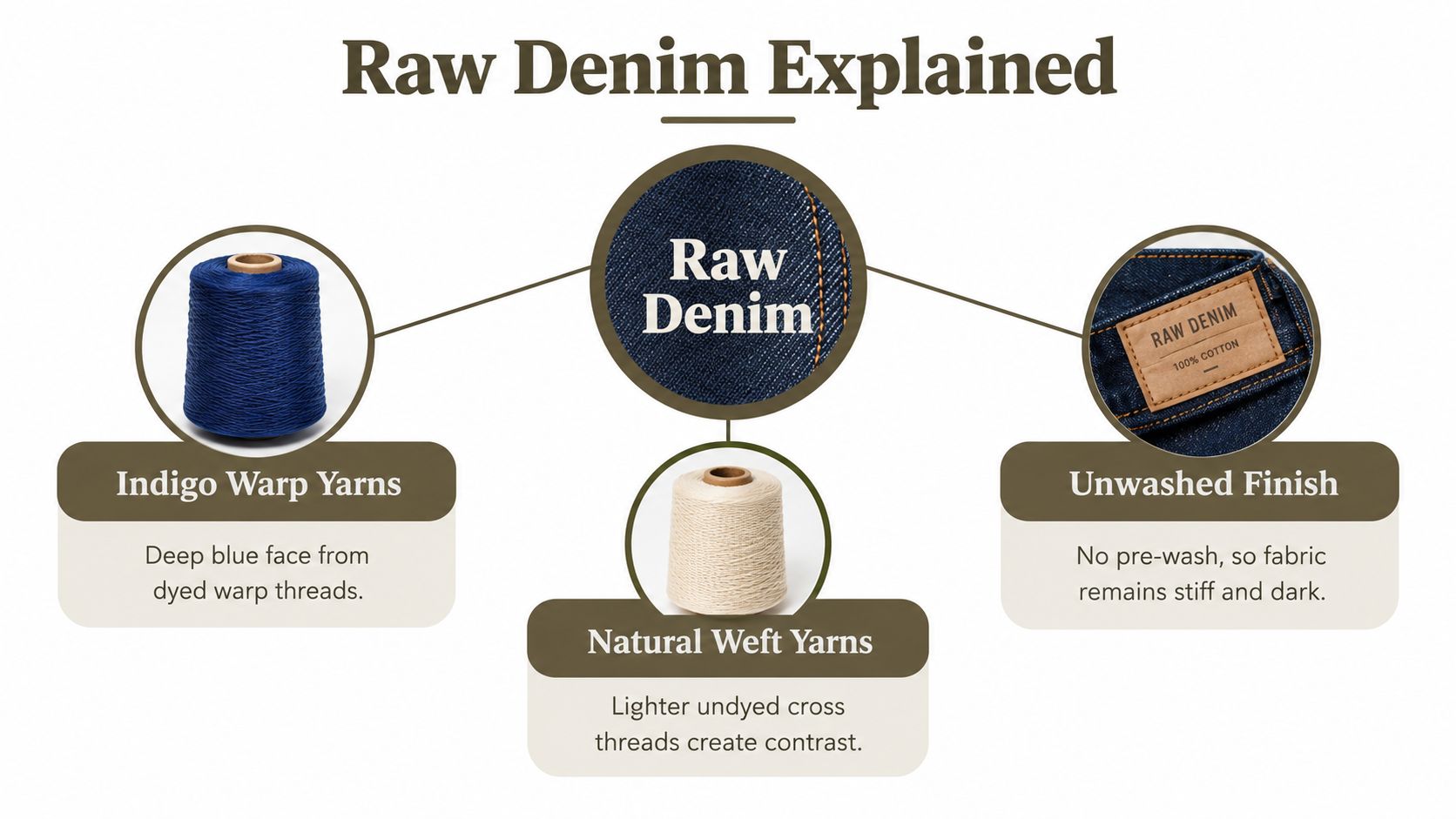
Start with the cloth itself. Denim is a twill fabric, woven so diagonal lines run across the surface. The lengthwise threads are the warp, and the crosswise threads are the weft. In classic indigo denim, the warp yarns are dyed deep blue while the weft yarns stay much lighter, usually natural or undyed.
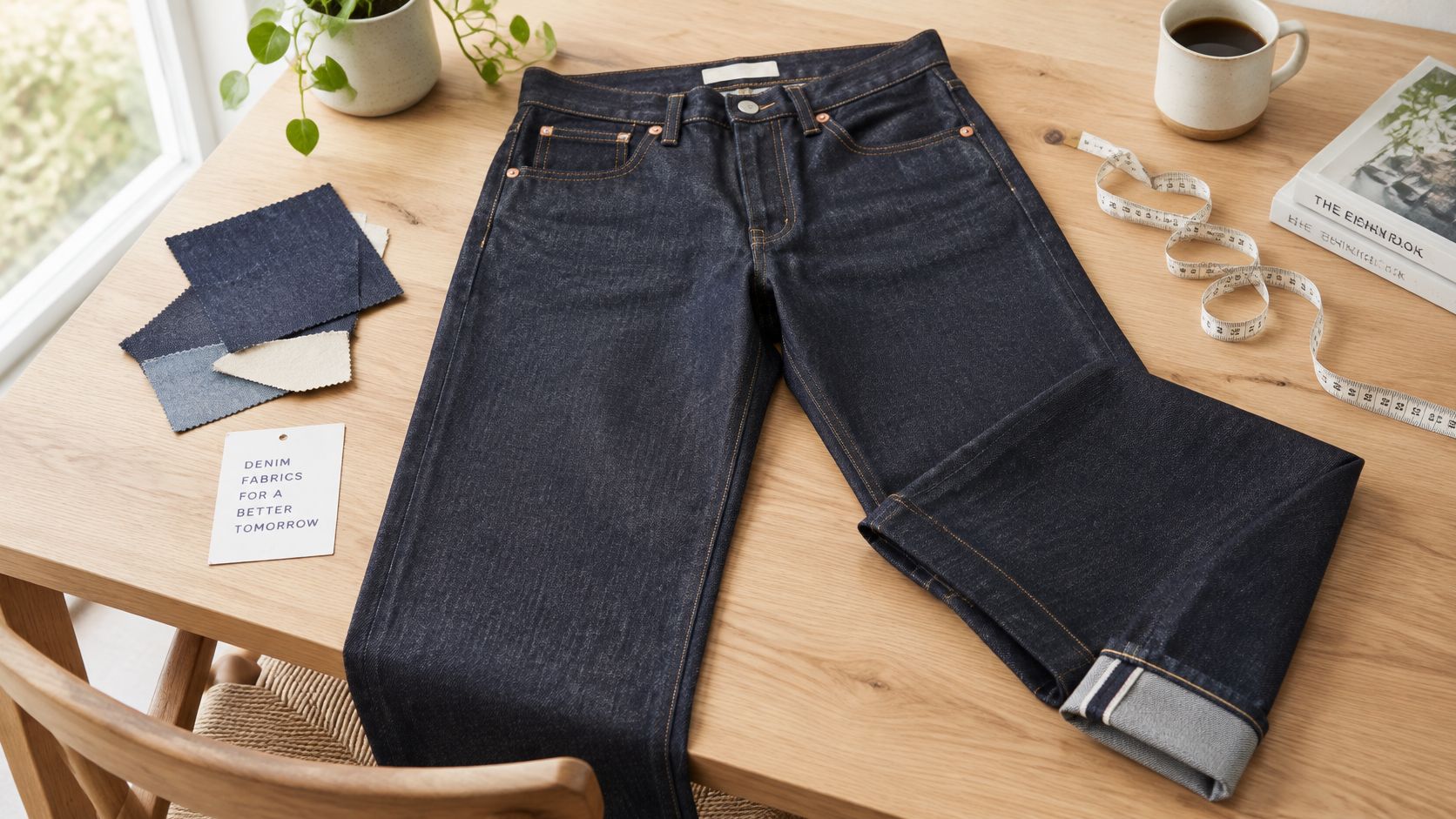
Because the twill structure puts more warp on the face of the fabric, the outside reads as dark blue and the inside reads pale. Flip a cuff and you'll see that contrast immediately. It's not a print or a coating. It's the weave showing you its two yarn systems.
Why the Surface Changes With Wear
Indigo sits largely on the surface of the warp yarn rather than saturating it completely. As you sit, walk, and bend, abrasion gradually removes indigo from high-contact areas. The lighter yarn core and weft show through, and that's how fades form at the thighs, knees, seat, and pocket edges. The garment starts as one thing and slowly becomes a record of how you moved in it.
Fabric choices control how that story unfolds. Fabric weight affects drape and stiffness. Yarn character affects texture, whether smooth or irregular. Dyeing method affects how quickly and how sharply contrast develops. Weave and finishing affect hand feel, strength, and how much the cloth will move when it's finally washed.
Raw Does Not Mean Unprocessed
Here's where readers often get confused. Raw means unwashed and minimally finished compared with heavily washed or distressed jeans. It doesn't mean the fabric skipped industrial processing altogether. Cotton was still grown, spun, dyed, woven, cut, and sewn.
It also doesn't automatically mean environmentally superior. Skipping factory washing can remove some operations, but fiber sourcing, dye chemistry, mill efficiency, transport, and consumer care still carry impacts. A peer-reviewed study of global denim trade and its footprints calculated a global-average water footprint of 9,870 cubic metres per tonne of cotton denim and emissions of 23.2 tonnes of CO2-equivalent per tonne, with fabric production alone accounting for 19.6 tonnes, or about 85% of the total carbon result. Fabric selection is therefore a major point of influence before cut-and-sew even begins.
Raw denim is less a fixed finish than a design brief whose outcome depends on material, construction, and wearer.
That framing helps you shop smarter. You're not buying a final look. You're buying a starting material, a pattern, and a set of instructions for what happens next.
Choosing the Right Fit for Women's Bodies
A waist number can't describe a body. Two women can share the same waist measurement and need completely different jeans because their hips, seats, thighs, and rises differ. For ladies raw denim jeans, fit works as a measurement system, not a single label. You need waist, hip, seat, front and back rise, thigh, knee, leg opening, and inseam working together.
Consider three shoppers. The first has a smaller waist relative to fuller hips. If she sizes to her hips, the waistband gaps at the back. If she sizes to her waist, the seat and thighs pull. That's a waist-to-hip proportion problem, and sizing down doesn't solve it. She needs a pattern with more hip shaping, a curved yoke, or a contoured waistband.
The second shopper has athletic thighs and a straighter hip. A slim tapered cut that fits her waist may restrict her thigh when she sits or climbs stairs. The third is petite, so rise length and knee placement matter as much as inseam. Hemming a long jean doesn't move the knee break or shorten a rise that sits too high.
Why Sizing Down Misleads
Enthusiast advice often says to choose raw jeans snugly because the waistband may stretch roughly one size with wear, a point reflected in Raleigh Denim guidance on raw denim fit and stretch, while thighs and crotch generally stretch much less. That distinction matters. A waistband that relaxes doesn't create room through a seat that's already straining, and it doesn't lengthen a rise that digs in when you sit.
"Tighter is better" may sharpen fades, since closer contact creates more abrasion. It can also produce daily discomfort and stress at seams. Comfort, body presentation, confidence, and style all shape whether a fit succeeds, and shoppers are especially concerned with fit around the hip and buttock area. Treat those zones as essential, not as areas you hope will give.
A Measurement-Led Way to Compare
Use this sequence before you buy:
- Measure your body first: Record natural waist, fullest hip, thigh, and preferred inseam from a jean you already wear well.
- Compare garment measurements: Check the product's actual waist, hip, rise, thigh, and inseam, not just its tagged size.
- Test movement, not just standing: Sit, walk, bend, and climb a step. Note pulling at the crotch, seat strain, or waistband digging.
- Ask about post-wash dimensions: Confirm whether listed measurements describe the jean before or after its first wash.
This is the same practical logic women use in other fit-critical clothing, whether they're choosing raw denim for daily wear or they compare western riding apparel options where seat, thigh, and movement matter in the saddle. The garment has to work in motion.
Write down how a candidate pair feels while seated and walking. Those notes beat memory when you're comparing a straight leg against a tapered or wide-leg option later. Fit is data, and your body is the source.
Compare Sanforized and Unsanforized Denim
One word on a product page changes your entire size decision. That word is the fabric's finishing state. Sanforized denim has been mechanically compacted before cutting to pre-shrink it. Unsanforized denim, also called loom-state, hasn't had that treatment, so most of its shrinkage is still waiting for your first wash.
The difference is concrete. According to a guide to denim fabric types and sanforization, sanforized denim typically limits post-wash dimensional change to about 1–3%, while unsanforized denim can shrink roughly 5–10%, with the largest change generally in the warp direction, which is the jean's length. That means inseam and rise are at greatest risk, although waist can contract too.
Raw Denim Finishing-State Comparison
| Consideration | Sanforized denim | Unsanforized denim |
|---|---|---|
| Predictability | High. Grading and size consistency are more stable. | Lower. Results depend on water temperature and drying. |
| First-wash behavior | Modest change. The jean you try on is close to the jean you'll keep. | Significant change. Length, rise, and waist can all contract. |
| Fit implications | Buy close to your measured size. | Allow extra length and confirm post-wash measurements. |
| Development controls | Standard shrinkage testing and clear care labels. | Pre-wash and post-wash specs, tighter tolerance planning, detailed labels. |
Matching Finish to Silhouette and Lifestyle
A sanforized high-rise straight leg suits a shopper who wants raw denim character with everyday predictability. She can trust the fitting-room inseam within a small range. An unsanforized wide leg suits a wearer who enjoys the shrink-to-fit process and is willing to plan length carefully before washing.
Neither is objectively better. They're different contracts with the wearer. Trouble starts when a brand sells an unsanforized jean with sanforized-style guidance, or when a shopper applies trend-driven inseam preferences without asking what the first wash will take away.
For product teams, this comparison drives grading, tolerances, and returns. Inseam loss and waist compression are predictable failure points, so size charts should rest on measured post-treatment dimensions. Care labels should state temperature and drying restrictions clearly, because the customer's laundry choices become part of your fit system whether you plan for them or not.
Wear and Care Raw Denim Without Mishaps
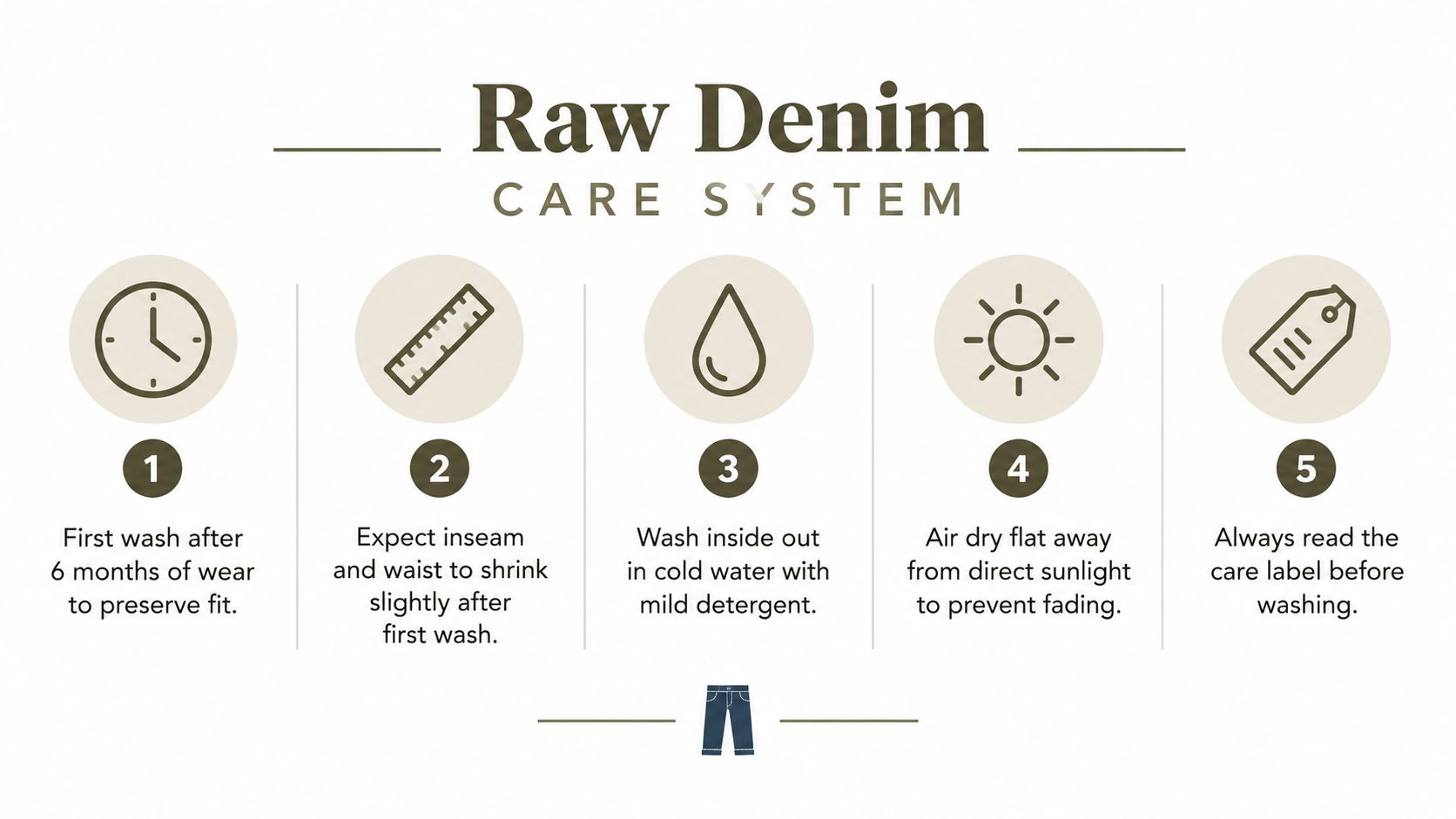
The first wash isn't routine maintenance. It's a fit event. Heat, moisture, and drying can change inseam, waist, color, and surface character, especially in loom-state fabric. Later washes maintain the garment. The first one can redefine it, so treat it as a planned step rather than an afterthought.
Indigo adds a second concern. Raw denim can crock, meaning dry dye rubs onto light shoes, bags, upholstery, or skin. In water, it can bleed and fade. That's not a defect by itself. It's how surface-dyed warp yarns behave, and it's why testing and label reading come before detergent.
A Careful First-Wash Sequence
- Read the care label first: Confirm permitted water temperature, agitation, and drying method for your specific garment.
- Check colorfastness discreetly: Test an inconspicuous area so you can gauge bleeding risk before a full wash.
- Choose gentler conditions: Lower-temperature washing generally preserves color and mechanical properties better than high heat.
- Dry as instructed: Follow the label instead of improvising, since drying drives part of the dimensional change.
- Inspect after treatment: Check inseam, waist, seam twisting, pocket bags, and hem behavior before wearing again.
Between washes, spot cleaning handles small marks without resetting the whole garment. Airing helps with odor for many wearers. Avoid inventing universal rules from internet folklore, though. There's no single schedule that suits every fabric, climate, job, and body, and anyone who promises one is oversimplifying.
Practical rule: Separate first-wash instructions from later maintenance in your own notes, because they serve different purposes.
Care also connects back to impact. Raw construction may reduce factory laundering compared with heavily washed jeans, but cotton cultivation, dyeing, weaving, sewing, transport, and your own laundry still matter. Wearing a durable pair longer, repairing stress points, and washing thoughtfully do more honest work than calling an unwashed jean sustainable by default. Good care protects both the fit you planned and the money you spent.
Specify and Manufacture Reliable Raw Denim Jeans
A shopper experiences fit. A factory experiences documentation. If the documents are vague, the most beautiful concept sketch can become an inconsistent product. Reliable ladies raw denim jeans begin with a specification that treats fabric behavior, body measurements, construction, and laundering as one connected system.
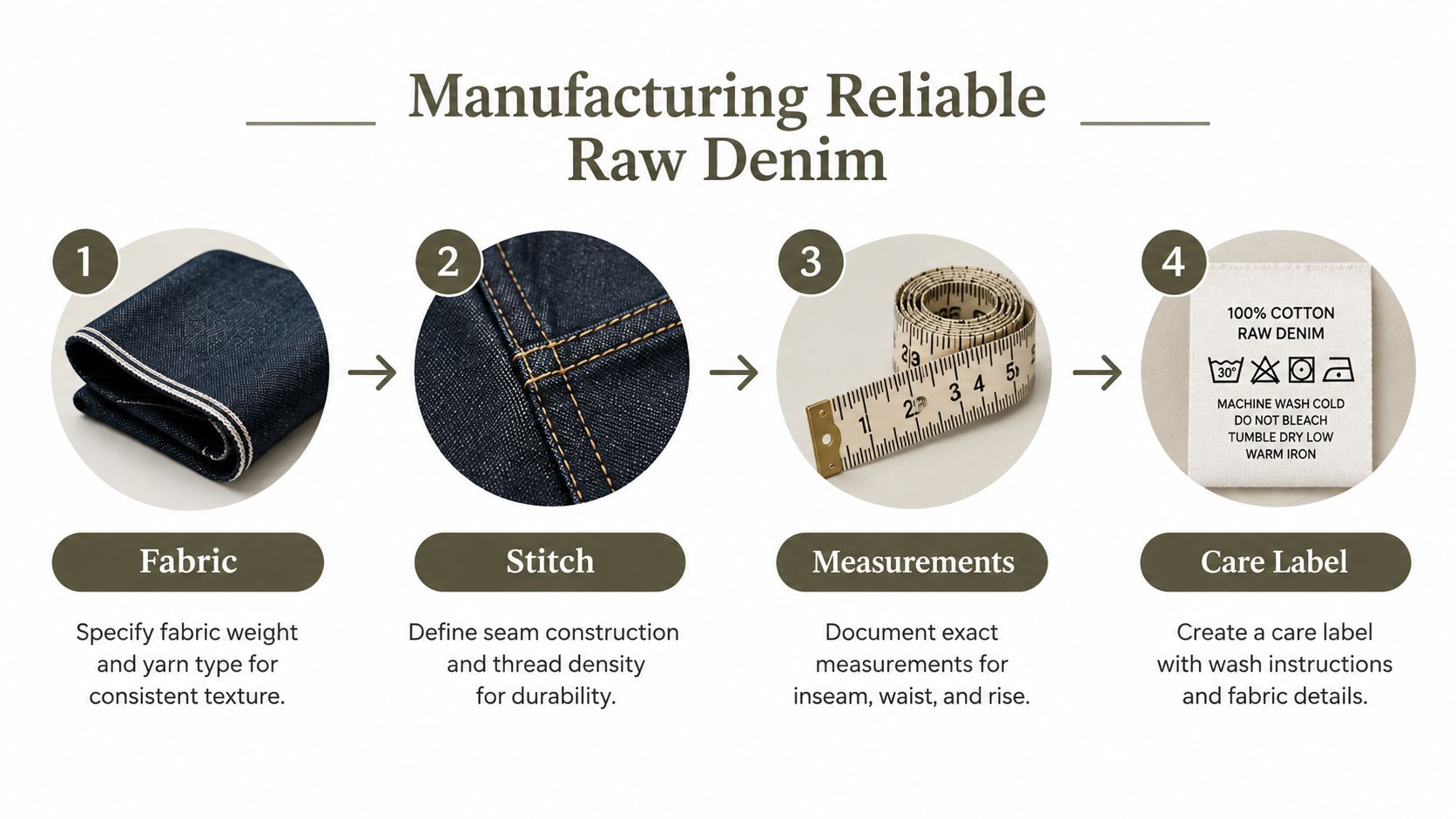
Start at the material level. The spec should name fabric weight and yarn construction, weave direction, indigo system, and sanforized status. It should set performance expectations for the warp and weft separately, because denim is anisotropic and those directions don't contribute equally to strength or stability. Published textile testing on twill denim strength and washing temperature reported higher tensile performance in the warp direction, including a mean maximum force of 421.75 N in one sample, and links higher washing temperatures with greater shrinkage, fading, reduced tensile strength, and surface degradation.
Test the Garment, Not Just the Swatch
A mill swatch can't predict a finished jean. Thread, pocketing, labels, interlining, seams, and trims all respond to water and heat at different rates, and those differences create distortion, puckering, or leg twist. Approve shrinkage using the actual assembled garment, then record pre-wash and post-wash measurements for waist, hip, rise, thigh, and inseam.
Your post-wash performance report should cover:
- Fabric and seam strength: Test after the intended first wash, not only in loom state.
- Colorfastness and crocking: Check dry rub, wet bleeding risk, and transfer onto light materials.
- Component compatibility: Validate pocket bags, waistband materials, and labels for differential shrinkage.
- Abrasion behavior: Confirm stress zones such as seat, thigh, and pocket corners hold up as intended.
Pattern and grading decisions belong in the same file. Document rise shape, yoke position, pocket placement, seam construction, stitch details, and measured tolerances for every size. A well-built set of spec sheet essentials for fashion designers helps keep those decisions readable across design, technical, and factory teams. When sizes extend, grade from body-shape logic rather than just scaling a base pattern and hoping proportions survive.
Finally, write the care label from your test results, not from habit. If high heat damages your validated fit, the label must say so. The label is a technical document the customer carries home.
Turn Product Decisions into Clear Marketing
Marketing should translate evidence, not decorate it. If your development file says a jean will shrink, fade unevenly, or crock onto light shoes, the product page has to say that in friendly, prominent language. Honest detail doesn't weaken a launch. It sets expectations that protect reviews, repeat purchases, and return rates.
Three scenarios show how this works. An unsanforized high-rise jean can be positioned for buyers who value personal fading and enjoy participating in the shrink-to-fit process. Its page should lead with post-wash measurements, explain first-wash planning, and show the fabric's genuine surface rather than artificial distressing.
A sanforized everyday style serves a different promise. Position it around predictable sizing and simpler care, with fit guidance based on garment measurements. Show it seated, walking, and cuffed so shoppers can judge rise and leg shape realistically.
An extended-size range needs the strongest discipline. Describe how grading responds to waist, hip, seat, and thigh relationships instead of repeating size-down advice. Publish measurements for every size, and use fit imagery across bodies so customers can see proportion, not just scale.
Keep Claims Aligned With Testing
Describe the finish accurately. Name the intended fit in measurement terms. Explain that fading depends on wear patterns, so identical results can't be promised. Disclose shrinkage and laundering conditions before checkout, not only on a sewn-in label the customer reads after delivery.
Customer response should then feed the next revision. Fit complaints, return reasons, and care questions are product data, and teams that turn customer insights into growth treat that loop as part of development rather than damage control. If buyers repeatedly misread inseam guidance, rewrite the guidance. If a size zone consistently pulls at the seat, revisit the block.
Digital concepting can support this alignment when prompts, references, brand standards, multi-view visuals, and tech-pack details stay in one workflow, an approach explored in AI fashion design for direct-to-consumer brands. Editable outputs and manufacturing exports help teams keep visuals, construction notes, and supplier communication consistent. They don't replace physical testing. A rendered fade is a communication aid, while a washed sample is evidence.
Build Your Final Raw Denim Decision
You don't need to memorize textile science to choose well. You need a sequence you can repeat. For shoppers, define the silhouette you want, measure your body and a favorite jean, check whether the denim is sanforized, confirm post-wash sizing information, and match the care routine to your real life. If you won't follow special laundering instructions, choose the product whose validated behavior fits the routine you keep.
Product teams can follow a parallel path. Define the wearer and her body-shape needs, approve materials, test shrinkage and performance on finished garments, engineer the pattern and grading, document construction, and align every marketing claim with validated behavior. A review of qualified clothing manufacturers should include how clearly a partner handles those records and revisions.
Watch for five warnings. Unexplained shrinkage signals incomplete testing. Generic size-down advice signals a weak fit system. Untested trims invite distortion after washing. Promises of identical fades ignore the wearer's role. Sustainability claims that focus only on skipped washing ignore the full production chain.
The best ladies raw denim jeans align material behavior, body-shape fit, construction, care, and communication as one product system. When those pieces agree, raw denim stops being a gamble and becomes what it should be. It's a durable garment you understand before you wear it, and one that keeps making sense after the first wash.
Turn your raw denim measurements, fabric choices, and fit logic into multi-view concepts, factory-ready tech packs, and launch-ready visuals in one connected workflow with Genpire. Bring a sketch, reference, or product idea and build the specifications, supplier exports, and marketing assets your next jean needs before sampling begins.